

What are you looking for?

Blog

We providing effective rewarding Psychotherapy

Is EMDR Effective for PTSD, Anxiety, and Panic?

Understanding EMDR Effectiveness
EMDR (Eye Movement Desensitization and Reprocessing) is a structured, evidence-based psychotherapy used to treat trauma. By using bilateral stimulation, such as eye movements or tactile cues, EMDR supports the brain’s ability to reprocess distressing experiences. Over time, this reduces the emotional charge of traumatic memories and improves daily functioning.

Addressing the Skepticism
If you’re a high-functioning professional, you likely approach personal development the same way you approach your work with intention, evidence, and results in mind. That’s why skepticism about trauma therapy is natural. You may ask, “Will EMDR actually work for me?” When anxiety interrupts your performance or panic spikes in high-stakes moments, EMDR may offer a targeted, efficient path forward.

How EMDR Works

During an EMDR session, the therapist helps you access a distressing memory while guiding you through bilateral stimulation. This process activates both hemispheres of the brain, allowing fragmented experiences to be reorganized and resolved. Think of it as updating outdated software. Your system keeps the memory but removes its disruptive programming. This process happens without the need for detailed verbal retelling, which many professionals find emotionally taxing or counterproductive.

Who Can Benefit from EMDR Therapy
EMDR is widely used to treat PTSD, panic disorder, phobias, and anxiety rooted in trauma. For professionals, symptoms might manifest as hypervigilance in high-pressure settings, avoidance of certain responsibilities, or chronic fatigue that doesn’t match your workload. While the EMDR therapy benefits are well-documented, this approach may not be suitable during active manic episodes or in cases of severe dissociation. Qualified therapists conduct thorough assessments before beginning treatment.

Scientific Evidence Supporting EMDR Treatment Outcomes
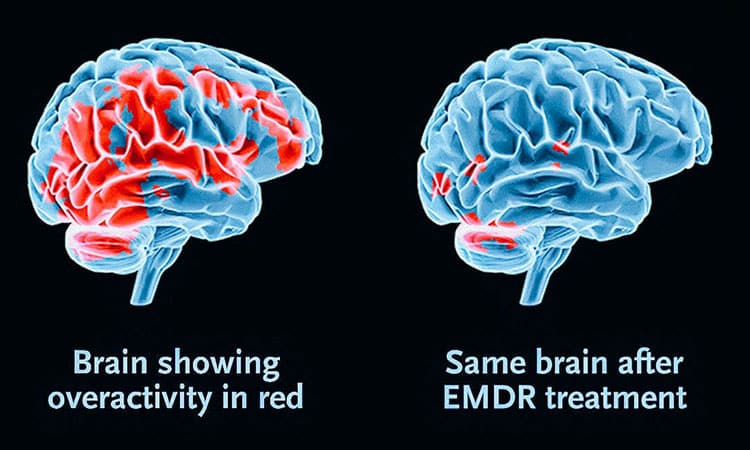
The EMDR treatment outcomes are backed by more than 30 randomized controlled trials. The World Health Organization endorses EMDR as a first-line treatment for PTSD. Brain imaging studies show that EMDR reduces overactivity in the amygdala (the fear center) and strengthens the regulatory function of the prefrontal cortex. Compared to cognitive behavioral therapy, EMDR often leads to faster reductions in somatic symptoms like heart palpitations, tension, and sleep disturbances. For many, this means relief without the cognitive overload of traditional homework-based therapy.

What to Expect in Treatment

EMDR typically involves 8 to 12 sessions. Early appointments focus on history-taking, identifying target memories, and building emotional regulation strategies. As therapy progresses, your clinician will guide you through reprocessing memories using bilateral stimulation. Most clients experience temporary emotional fatigue following sessions, which is part of the brain’s adaptive process. Your therapist will teach stabilization tools to help you stay grounded between visits.

Best Practices for Getting Started
Choose a certified EMDR clinician through a trusted directory such as EMDRIA. Be prepared to commit to several sessions before evaluating results. It often takes a few weeks for benefits to build. Between sessions, consider light somatic practices like gentle breathwork to support nervous system regulation. It is also wise to keep your schedule light after appointments, as emotional integration may take time.

Clarifying Common Myths

Myth: EMDR is a form of hypnosis.
Fact: You remain alert, engaged, and in control throughout the process.

Myth: EMDR only helps military trauma.
Fact: EMDR is highly effective for everyday professionals experiencing trauma from car accidents, medical emergencies, workplace stress, or childhood adversity.

FAQ

Q: How fast does EMDR work for anxiety?
A: Some clients report reduced physiological symptoms, like a calmer heart rate or fewer intrusive thoughts within three sessions. More complex cases may require longer treatment.

Q: Can EMDR address panic without PTSD?
A: Yes. EMDR helps reprocess triggers that reinforce panic cycles, even when PTSD is not formally diagnosed.

Q: Does EMDR work without medication?
A: Many find it effective on its own. EMDR targets the neurological origins of trauma, though some clients choose to combine it with medication for broader symptom management.

Take the Next Step
If you’re ready to explore trauma therapy that meets the pace and precision of your professional life, consider connecting with an EMDR-certified therapist.

What to Expect in Your First EMDR Session

Understanding EMDR
EMDR (Eye Movement Desensitization and Reprocessing) is a structured form of trauma therapy designed to help the brain reprocess distressing memories. By using bilateral stimulation such as guided eye movements or tapping, EMDR enables emotional blocks to shift, allowing traumatic experiences to be integrated into your broader memory network without the same psychological charge.

Why High-Functioning Professionals Consider EMDR
You’re used to performing under pressure, solving complex problems, and leading with precision. But even high-functioning professionals can carry unresolved trauma that shows up as burnout, irritability, sleep disruption, or emotional detachment. If you’re skeptical about trauma therapy or curious whether EMDR is worth your time, you’re not alone. This article breaks down what actually happens in your first EMDR session, and why it might be one of the most productive hours of your healing journey.

What Happens During Your First EMDR Session

The first EMDR session is about preparation, not immediate reprocessing. Your therapist will begin with a structured intake, asking questions to understand your history, identify potential trauma targets, and assess your readiness. You’ll be introduced to grounding techniques to manage emotional intensity methods like breathwork, visualization, or tactile cues.

The therapist will also explain how bilateral stimulation works. Depending on your preference and clinical needs, this may involve eye movements, alternating tones, or gentle tapping. If you feel ready, some therapists may begin light reprocessing work. But the pace is always tailored to your nervous system’s tolerance, with constant check-ins to ensure stability.

The Neuroscience Behind EMDR Therapy
Functional MRI studies reveal that EMDR therapy reduces hyperactivity in the brain’s fear center, the amygdala. Unlike traditional talk therapy, which emphasizes cognitive insight, EMDR targets deeper, nonverbal memory networks. This often leads to faster emotional shifts without requiring you to relive every detail of your trauma verbally.

Is EMDR Right for You?
This approach is particularly well-suited for high-performing individuals dealing with anxiety, perfectionism, or chronic overwhelm linked to past trauma. However, EMDR isn’t recommended in cases of active psychosis, severe dissociation, or unmanaged substance use. Your therapist will assess these factors carefully.

How EMDR Differs from Traditional Trauma Therapy

While many therapies rely on insight and narrative work, EMDR helps the brain process trauma without lengthy discussion. You may work with emotions, physical sensations, or vague impressions rather than complete memories. For professionals who find verbal processing exhausting or slow, EMDR can offer a more efficient path toward relief.

Setting Expectations: What You Need to Know

  • Sessions are 60–90 minutes and begin with building trust, not diving into trauma.
  • You are always in control. Sessions pause as needed.
  • You might feel tired or emotional afterward. Schedule light activities or quiet time to integrate the work.

Common Myths About EMDR

Myth: EMDR erases memories.
Fact: Memories stay intact, but their emotional grip weakens.

Myth: One session can resolve deep trauma.
Fact: While shifts can be immediate, complex trauma typically requires multiple sessions.

Helpful Preparation for Your First Appointment
Consider journaling light reflections, such as moments that trigger tension or recurring stress patterns. Avoid detailing traumatic events before your session unless your therapist recommends it. Post-session, gentle movement like walking can support emotional processing. Most importantly, choose a certified clinician through the EMDR International Association to ensure quality care.

FAQs

Q: Is EMDR appropriate soon after a traumatic event?
A: Yes, but therapists may prioritize safety and stabilization before processing to prevent retraumatization.

Q: What if I can’t recall specific memories?
A: EMDR can work with sensations, emotions, or images that don’t form a full narrative. Clarity often unfolds during the process.

Q: Why choose EMDR over traditional therapy?
A: EMDR often appeals to those who prefer experiential, body-informed methods that bypass the need for repeated storytelling.Take the First Step
EMDR isn’t just about healing it’s about reclaiming clarity, performance, and emotional resilience. If you’re ready to explore this path, search for a certified therapist at the EMDRIA directory or review our professional guide to trauma recovery.

How Does EMDR Work in the Brain?

A Guide to Trauma Recovery for High-Functioning Professionals

EMDR (Eye Movement Desensitization and Reprocessing) is a form of therapy that helps people heal from trauma by using bilateral stimulation—like guided eye movements—to help the brain reprocess and store disturbing memories in a healthier way.

Why So Many High-Functioning Professionals Are Turning to EMDR

You might look put-together on the outside—but inside, you’re mentally exhausted, emotionally worn down, and haunted by memories or patterns that won’t let go. You’ve achieved a lot, but something still feels off. Maybe you’ve tried talk therapy and found it insightful—but not transformative.

If that resonates, EMDR therapy may be the tool you didn’t know you needed.

This article explores how EMDR works in the brain, why it’s effective for high-functioning professionals with anxiety, burnout, or trauma-related symptoms, and what to expect from the process.

How Does EMDR Work in the Brain?

When the brain encounters overwhelming stress or trauma, it sometimes fails to “file” the memory properly. Instead, the memory stays raw—emotionally intense and physically reactive—making it easy to get triggered.

EMDR therapy and the brain connect through a process that mimics REM (rapid eye movement) sleep, where memories are naturally sorted and stored. During EMDR sessions, a therapist guides you through bilateral stimulation—typically side-to-side eye movements—while you briefly recall traumatic or disturbing moments.

This allows your brain to reprocess stuck memories, moving them from an emotionally reactive state to a more neutral, resolved one.

It’s not about forgetting—it’s about releasing. EMDR gives the brain the conditions it needs to heal trauma neurologically, not just emotionally.

Who Benefits Most From EMDR?

EMDR is particularly effective for:

  • Professionals coping with chronic stress, anxiety, or burnout
  • People with unresolved trauma from childhood or adulthood
  • Those experiencing panic attacks, phobias, or performance blocks
  • Clients who’ve tried talk therapy but feel stuck in recurring patterns

While EMDR is safe for most people, it’s not recommended during acute psychiatric crises or without a strong therapeutic foundation in dissociative conditions.

The Science Behind EMDR

Let’s look at the neuroscience behind how EMDR helps trauma:

  • Amygdala: The brain’s alarm bell. EMDR reduces its hypersensitivity.
  • Hippocampus: Manages memory and context. EMDR helps integrate traumatic memories into the past.
  • Prefrontal Cortex: Your reasoning center. It becomes more engaged after EMDR, allowing clearer thinking and less reactivity.

Research using brain scans shows that EMDR brain healing is real. After EMDR treatment, the brain shows less activity in fear-based areas and greater integration across memory and emotion centers.

What to Expect During EMDR Therapy

The EMDR process follows eight structured phases:

  1. History & Planning
  2. Preparation with grounding tools
  3. Targeting specific memories
  4. Bilateral stimulation (eye movements, taps, tones)
  5. Installing new beliefs
  6. Body scans for lingering discomfort
  7. Closure and grounding
  8. Re-evaluation and next steps

Some clients report major shifts after just a few sessions; others work through a series of memories over time. Either way, EMDR is designed to produce lasting change.

Best Practices Before Starting EMDR

  • Work with a certified EMDR therapist—ideally one trained through EMDRIA
  • Start small. You don’t need to confront everything all at once
  • Use grounding tools like breathing or visualization between sessions
  • Be patient with integration. Sometimes you’ll feel worse before you feel better
  • Stick with it. EMDR is powerful, but like physical therapy for the brain, it takes commitment

Myths vs. Facts About EMDR

Myth: EMDR is hypnosis.
Fact: EMDR doesn’t put you under—you’re awake and in control the whole time.

Myth: You must relive everything in detail.
Fact: You focus on key parts of the memory. Verbal detail isn’t necessary.

Myth: It only works for PTSD.
Fact: EMDR also helps with anxiety, grief, phobias, and self-esteem issues.

Frequently Asked Questions

How is EMDR different from talk therapy?
Talk therapy involves insight and analysis. EMDR activates the brain’s processing systems directly—helping you change how your brain stores the memory, not just how you think about it.

What kind of trauma does EMDR treat?
Everything from “big T” traumas like assault or accidents to “small t” experiences like bullying, humiliation, or chronic stress.

Can EMDR be done virtually?
Yes. Many therapists offer EMDR online using visual or auditory stimulation methods.

How fast does EMDR work?
Some clients feel better in a few sessions. Others need more time depending on the complexity of the trauma. EMDR often works faster than traditional therapy.

Ready to Explore EMDR Therapy?

If you’re a high-achieving professional stuck in cycles of anxiety, burnout, or distress—EMDR could help you finally move forward. Schedule a consultation today or explore our EMDR resources to learn more about how EMDR works in the brain and whether it’s the right fit for you.

What Is EMDR Therapy? A Guide to Healing Trauma Without Reliving It

If talk therapy hasn’t helped, EMDR might. Here’s how this science-backed method helps rewire your relationship to trauma—without reliving the past.

What Is EMDR Therapy?

EMDR (Eye Movement Desensitization and Reprocessing) is a structured, evidence-based psychotherapy designed to help people heal from distressing or traumatic experiences. It uses bilateral stimulation—such as eye movements, taps, or sounds—to help the brain reprocess memories and file them in a more adaptive way.

Think of it like reorganizing your mental filing cabinet: the painful memory stays, but it no longer triggers the same intense emotional reaction.

Why People Turn to EMDR

Have you ever thought, “I’ve done all the right things, but I still feel off”?
Or maybe you’ve spent years in therapy, talking in circles, without feeling real change.

EMDR is designed for those moments when traditional talk therapy falls short—when the problem feels stuck in your body, not just your mind.

How EMDR Works

Trauma doesn’t always fade with time. Sometimes, the brain doesn’t process it correctly—leaving you emotionally frozen in the moment.

EMDR stimulates both sides of the brain (left and right hemispheres) while you recall a distressing event. This bilateral stimulation mimics the natural brain processing that occurs during REM sleep and allows the brain to complete the memory, putting it in the past where it belongs.

Who Can Benefit from EMDR?

EMDR is used by therapists worldwide to treat:

  • PTSD and complex trauma
  • Anxiety and panic attacks
  • Childhood abuse or neglect
  • Phobias, grief, OCD
  • Performance anxiety (executives, creatives, athletes)
  • Medical trauma and chronic pain

It’s also helpful for people who:

  • Feel “stuck” in therapy
  • Have trouble talking about their trauma
  • Want results without rehashing everything out loud

Note: EMDR may not be appropriate during crisis moments or for individuals with severe dissociation. A skilled EMDR therapist will assess your readiness first.

Is There Science Behind It?

Yes—decades of research support EMDR as a frontline treatment for trauma.

  • Endorsed by the American Psychological Association, Veterans Affairs, and World Health Organization
  • Over 30 controlled studies show that up to 90% of PTSD patients no longer meet diagnostic criteria after 6–12 sessions
  • Brain imaging studies show reduced activity in the amygdala (your fear center) after EMDR treatment

Compared to other therapies:

  • CBT works through thought restructuring
  • Exposure therapy focuses on retelling the trauma
  • EMDR allows the brain to reprocess trauma without reliving it in detail

What Happens in an EMDR Session?

EMDR follows an 8-phase protocol. Here’s a simplified overview of what to expect:

  1. History + Treatment Planning – Learn about your background and goals
  2. Preparation – Build safety and coping tools
  3. Assessment – Identify the memory or belief to target
  4. Desensitization – Use bilateral stimulation while recalling the memory
  5. Installation – Reinforce new, positive beliefs
  6. Body Scan – Notice any residual tension or emotion
  7. Closure – Return to calm and stability
  8. Reevaluation – Check in and decide next steps

Most people feel shifts within 3–6 sessions, though more complex cases may take longer.

Best Practices for Starting EMDR

  • Work with a certified EMDR therapist (preferably EMDRIA-approved)
  • Ask about “resourcing”—a phase that builds emotional safety before diving into trauma
  • Journal between sessions to track emotional changes and insights
  • Go at your own pace—this isn’t a race

Common Myths About EMDR (Debunked)

Myth 1: “It’s hypnosis.”
→ False. You’re fully awake and in control throughout the session.

Myth 2: “You have to talk about every detail.”
→ Nope. EMDR focuses on how the memory feels, not the full retelling.

Myth 3: “It’s only for combat veterans.”
→ Not at all. EMDR helps anyone with unresolved distress, including childhood wounds, anxiety, and even performance blocks.

TL;DR: The Takeaway

EMDR therapy helps people reprocess trauma at the root—so they can live without emotional flashbacks, shame spirals, or unexplained anxiety. It’s fast, powerful, and evidence-based. And best of all? You don’t need to talk about everything to heal.

Feeling Anxious About Therapy? Here’s How to Calm Your Nerves

Starting therapy is a courageous step, especially if you’re already managing anxiety. It’s a journey that takes effort, and like many journeys, the first steps can feel intimidating. Let’s break down some common anxieties around finding a therapist, attending your first session, and sticking to the treatment plan.

Finding the Right Therapist: From Search Stress to Confidence

When you’re ready to start therapy, it’s easy to feel overwhelmed by all the options. From choosing the right approach (CBT, psychodynamic, EMDR…) to finding a therapist you can connect with, the search alone can feel like an uphill climb.

How to Make It Easier:

  • Define Your Goals: Before you start the search, think about what you’re hoping to gain from therapy. Is it to manage anxiety, heal from past trauma, or improve relationships? This clarity will help you focus on therapists who specialize in what you need.
  • Ask for Recommendations: Friends, family, or even primary care doctors can often point you in the right direction.
  • Embrace Trial and Error: Not every therapist will be the right fit, and that’s okay! It’s perfectly normal to try a few before you find one who clicks. Remember, finding a therapist is like dating; it’s okay if you don’t find “the one” immediately.

2. Your First Session: “What Do I Even Say?”

Walking into a therapist’s office for the first time can feel nerve-wracking. The room might be unfamiliar, and the idea of opening up to a stranger is daunting.

How to Prepare for Session One:

  • Challenge Negative Thoughts: If you’re worried about “saying the wrong thing” or being judged, remind yourself that therapists are trained professionals here to help, not critique.
  • Set Realistic Expectations: Therapy is a process, not a magic wand. Your first session is about building a connection, not solving everything in one hour.
  • Bring a List of Concerns: If you’re anxious about getting started, consider jotting down some topics you’d like to discuss or goals you have for therapy. This list can be a helpful guide, so you don’t feel lost during the session.

Remember, it’s okay to feel nervous! Showing up is a victory on its own.

3. Sticking to the Treatment Plan: The Real Work Begins

After a few sessions, it’s common to feel motivated—or a bit discouraged. Therapy isn’t a one-and-done process; it takes time, commitment, and a willingness to follow through on the treatment plan.

Strategies to Stay on Track:

  • Set Small, Achievable Goals: Maybe you’re working on managing anxious thoughts or handling stress better. Breaking down your goals into manageable steps can make the process feel less daunting.
  • Practice Self-Compassion: Therapy can bring up challenging feelings. It’s important to be kind to yourself and recognize that progress may come slowly but is happening.
  • Celebrate Small Wins: Did you complete a challenging exercise or show up even when you wanted to skip? Celebrate those victories! These are signs of growth.

When Therapy Feels Tough: How to Manage Frustration

Therapy isn’t a quick fix; it’s more like training for a marathon. Sometimes, it can even bring up feelings that make you want to quit. Don’t worry—this is all part of the journey.

What to Do When You’re Feeling Discouraged:

  • Talk It Out: If therapy feels too hard, let your therapist know. They can adjust the approach, making it more manageable.
  • Remember Your “Why”: Keep reminding yourself why you started therapy in the first place. What are the goals you’re working toward? Reconnecting with your “why” can provide motivation during tough patches.

Therapy as an Ongoing Journey: The Long-Term Commitment to Growth

Therapy isn’t about becoming “perfect.” It’s about learning to navigate life’s challenges with resilience and self-compassion. If you stay consistent, keep an open mind, and trust the process, therapy can provide life-changing benefits.

Conclusion: Be Proud of Every Step You Take

The fact that you’re even thinking about therapy shows a commitment to yourself and your well-being. Whether it’s finding a therapist, getting through that first session, or sticking with it on tough days, each step is worth celebrating. Therapy might feel intimidating at first, but with time, it can become one of the most rewarding investments in yourself.